

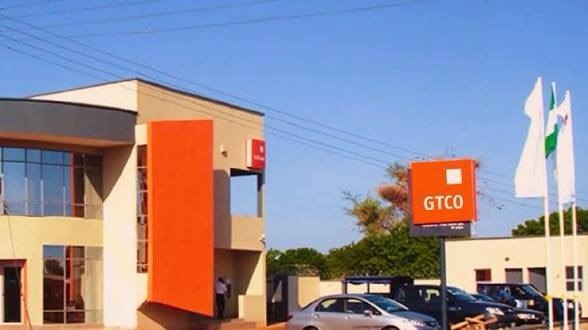
Shares of Guaranty Trust Holding Company (GTCO) have declined by 6.5% in one week following the release of its financial results for the nine months ended September 30, 2026.
The company’s share price fell from ₦125.10 on October 26 to ₦117 on November 2, representing a loss of ₦8.10 per share.
The decline came shortly after GTCO released its unaudited third-quarter financial results on October 27, showing lower profits compared with the same period in 2025.
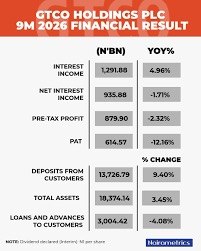
According to the report, the financial services group recorded a profit after tax of ₦614.6 billion, down 12.2% from the ₦699.6 billion reported in the corresponding period last year.
Profit before tax also declined by 2.3%, falling from ₦900.8 billion to ₦879.9 billion.
Higher Income Fails to Offset Rising Costs
Despite the decline in profitability, GTCO recorded growth in interest income, which increased by 5% to ₦1.29 trillion from ₦1.23 trillion a year earlier.
Interest income represents money earned from loans, investments and other interest-generating financial assets.
However, the increase was accompanied by a sharper rise in interest expenses. The company’s interest expenses climbed by approximately 27.7% to ₦356 billion, reducing the amount left from its interest-earning activities.
Operating expenses also increased by 9.5%, rising from ₦365 billion to ₦399.8 billion.
Meanwhile, non-interest income declined slightly by 1.5% to ₦368 billion.
These developments put additional pressure on the company’s earnings, as higher income from interest-generating activities was not enough to offset the increase in expenses.
Also Read: Firm introduces app to combat theft, fraudulent transactions
Fair-Value Losses and Tax Changes Add to Profit Pressure
Another factor affecting GTCO’s performance was a fair-value loss of ₦87.9 billion during the nine-month period.
Fair-value losses occur when the market value of certain financial assets falls, reducing the value recognised in a company’s financial statements.
GTCO also attributed part of its lower profit after tax to changes in Companies Income Tax (CIT) regulations, which affected the capital allowance reliefs available to the group.
Capital allowances are tax deductions that businesses can claim on qualifying capital investments. Changes to these deductions can increase a company’s taxable income and ultimately reduce its after-tax profit.
Consequently, the company’s earnings per share (EPS) fell from ₦20.71 to ₦16.58.
EPS measures the portion of a company’s profit attributable to each ordinary share. However, GTCO noted that the decline was also influenced by an increase in its outstanding shares following capital-raising exercises in 2024 and 2025.
What GTCO’s Results Mean for Investors
Although the latest figures show weaker profitability, some areas of GTCO’s business continued to record growth.
The company’s total assets increased by 3.5% to ₦18.37 trillion, while deposit liabilities grew by 8.6% to approximately ₦13.98 trillion.
Its asset quality also improved, with Group-level Stage 3 loans declining from 5% at the end of 2025 to 4% in September 2026. Stage 3 loans are credit facilities classified as impaired because they have experienced a significant deterioration in credit quality.
These figures suggest that the group maintained growth in its deposit base and recorded improvements in certain aspects of its lending portfolio, despite the decline in overall profitability.
However, the recent movement in GTCO’s share price does not, on its own, establish that the financial results were the only reason investors sold the stock.
Going into the final quarter of 2026, investors will be watching how the company manages its operating and funding costs, responds to changes in tax regulations and sustains income growth.
Whether these improvements translate into stronger profits will be an important factor in assessing GTCO’s financial performance going forward.
Follow Techdinge for more updates on Nigeria’s financial markets, banking sector and technology industry.