

Nigeria’s new tax law is here, here’s what it means for tech workers, freelancers, and startups in 2026
Introduction
Nigeria’s tax law officially took effect on January 1, and for people working in tech, this isn’t just another government update, it’s a real shift in how income, businesses, and digital work are treated.
If you earn through tech, whether as a startup founder, software developer, designer, data analyst, freelancer, remote worker, or digital creator, this new tax system directly affects how much you pay, what qualifies as taxable income, and how you stay compliant.
This article explains Nigeria’s tax law in plain terms, with a specific focus on the tech ecosystem. You’ll understand what has changed, what still applies, and what practical steps tech earners should take right now.
What Nigeria’s New Tax Law Is Trying to Fix
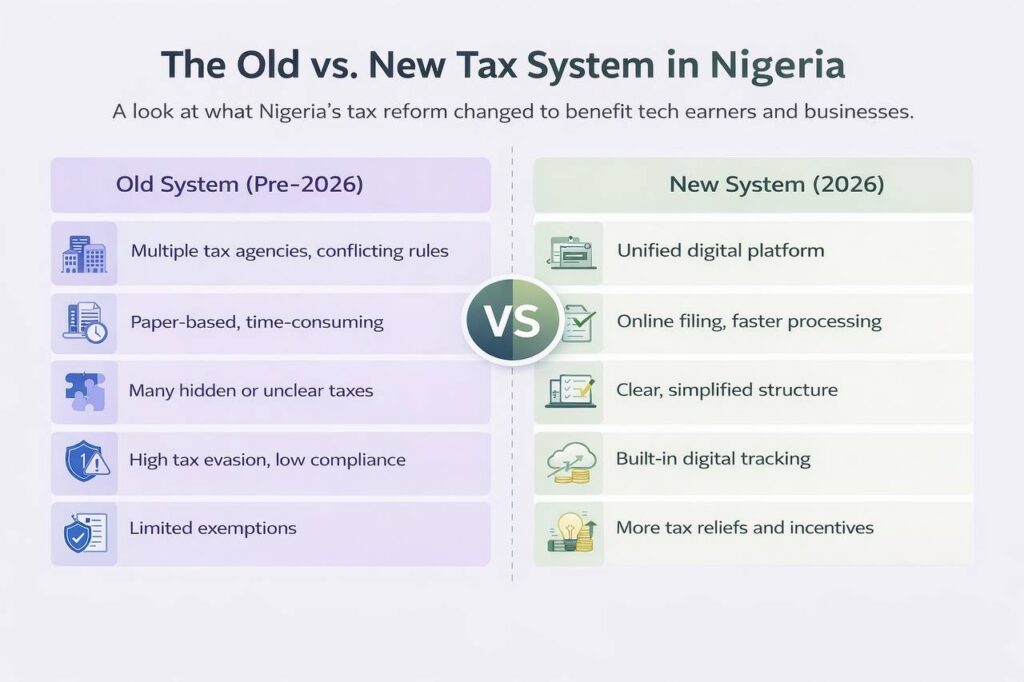
For a long time, Nigeria’s tax system struggled to keep up with modern work, especially tech-driven income. Digital payments, remote jobs, freelancing, startups, and platform-based earnings often fell into unclear or overlapping tax rules.
Nigeria’s tax law reform is designed to clean this up by:
- Simplifying tax rules so individuals and businesses can understand them without legal help
- Ensuring fairness, by taxing actual income earned—not assumptions
- Expanding the tax base, instead of overburdening a small group
- Moving compliance online, reducing paperwork and physical queues
For the tech sector, where most income is digital and borderless, this clarity matters.

The Legal Framework Behind the Reform
Nigeria’s tax law reform is built on four Acts, all of which are now in force and working together:
Nigeria Tax Act (NTA)
This Act defines what income is taxable, who must pay tax, and the applicable rates—covering individuals, startups, and companies.
Nigeria Tax Administration Act (NTAA)
This governs how taxes are registered, filed, paid, and monitored, with a strong emphasis on digital systems.
Nigeria Revenue Service Act (NRSA)
This strengthens the authority of the tax agency, improving enforcement while aiming for more transparency at the tax office (currently known as the FIRS).
Joint Revenue Board Act (JRBA)
This helps federal and state tax bodies coordinate better, reducing double taxation, an issue many techs’ businesses face.
What Nigeria’s Tax Law Means for Tech Earners
The impact depends on how you earn your income within tech.
For Salaried Tech Workers and Remote Employees
This includes developers, engineers, product managers, designers, analysts, and other tech professionals earning a salary—locally or remotely.
Also Read: This Week in Crypto: Market Recap, Big Gainers & Crypto
Higher Tax-Free Threshold
If your annual income is ₦800,000 or below, you are now exempt from personal income tax. This provides relief for junior roles and early-career professionals.
Targeted Reliefs Replace CRA
The old Consolidated Relief Allowance (CRA) has been replaced with specific reliefs you can actively claim.
One key example is:
- 20% rent relief, capped at ₦500,000
Deductible Contributions
Contributions to pension, housing, and health insurance are fully deductible. Structuring your finances properly now directly reduces your taxable income.
Electronic Money Transfer Levy (EMTL)
EMTL now operates under state-managed stamp duties. Smaller transfers remain exempt, while larger ones may attract minor charges—important for tech workers receiving frequent digital payments.
For Freelancers, Contractors, and Independent Tech Earners
This group includes freelance developers, designers, consultants, writers, creators, Web3 contributors, and remote gig workers.
Tax Is Based on Income Earned
Nigeria’s tax law clearly separates money earned from money held.
- Funds sitting in a current account are not taxable
- Interest earned from savings or investments is taxable—only on the interest, not the principal
This is especially important for freelancers with irregular income patterns.
Record-Keeping Matters More
With digital compliance now central, keeping clean records of:
- Invoices
- Client payments
- Platform earnings
will make compliance smoother and reduce disputes with tax authorities.
For Tech Startups and Digital Businesses
For founders and early-stage companies, the reform is largely supportive.
Zero Corporate Income Tax for Small Tech Businesses
Tech startups with annual turnover below ₦50 million now pay zero corporate income tax. This gives young companies room to grow without early tax pressure.
VAT Remains at 7.5%
VAT is unchanged, but reporting is increasingly digital.
Essential services like education, food, and healthcare remain VAT-exempt, while digital services must be structured correctly—especially for B2B tech companies.
Incentives for Innovation
Sectors such as technology, agriculture, and renewable energy continue to receive incentives aimed at driving growth and innovation.
Other Important Points Tech Professionals Should Know
- FGN bonds and insurance payouts: remain tax-free
- Retirement savings: contributions, growth, and withdrawals are not taxed
- Stocks: owning shares isn’t taxed; capital gains apply when sold
- Rent relief: 20% relief, capped at ₦500,000
- Gifts and inheritance: remain untaxed
The overall message of Nigeria’s tax law is clear: formalize your income, invest wisely, and grow without fear of unfair taxation.
How Tech Professionals Can Stay Compliant
Since the law is already in effect, compliance should start now, not later.
Personal Compliance Checklist
✅ Register or update your Tax Identification Number (TIN)
✅ Keep digital records of income and expenses
✅ Update employer or client details
✅ Track both local and foreign income
✅ Maximise pension, housing, and health reliefs
Startup and Freelancer Checklist
✅ Ensure CAC registration is active
✅ Use digital invoicing and accounting tools
✅ Review your business structure for efficiency
✅ File returns on time
✅ Claim all available exemptions and incentives
Conclusion
Nigeria’s new tax law reflects a shift toward a more modern, digital-friendly economy—and the tech ecosystem sits right at the center of it.
For tech workers, it introduces clearer thresholds and practical reliefs. For freelancers and startups, it finally recognises how digital income works, focusing taxation on what you truly earn.
Staying informed isn’t just about avoiding penalties—it’s about protecting your income and positioning yourself for long-term growth in Nigeria’s evolving tech landscape.
Read More: NFRC 2025: How Nigerian Fintechs Can Get Operationally Ready Now