

When 5G networks first launched around the world, they sparked one of the biggest technology controversies in recent history. False claims linked the network to health problems and even COVID-19, despite scientists repeatedly confirming there was no evidence to support those theories.
Fast forward a few years, and 5G has become a normal part of everyday life. It powers faster internet connections, lower-latency gaming, smart devices, and many of the connected services people now rely on.
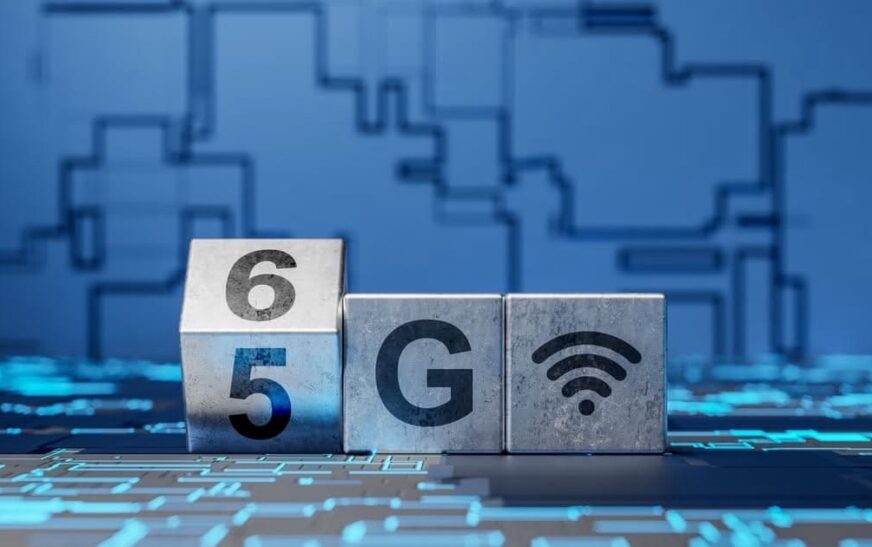
Now, attention is shifting to 6G, the next generation of wireless technology. While commercial rollout is still several years away, researchers are already testing features that sound like science fiction, including the possibility of detecting movement and even breathing through walls.
So, what exactly is 6G, and should people be concerned?
What Is 6G?
6G is the sixth generation of mobile network technology that will eventually succeed 5G. Although it is still under development, experts expect it to deliver significantly faster speeds, lower latency, and improved reliability compared to today’s networks.
Beyond speed, however, 6G aims to make wireless networks much smarter. Instead of only transmitting data between devices, researchers are designing 6G to also understand and interact with its surroundings using advanced sensing technologies.
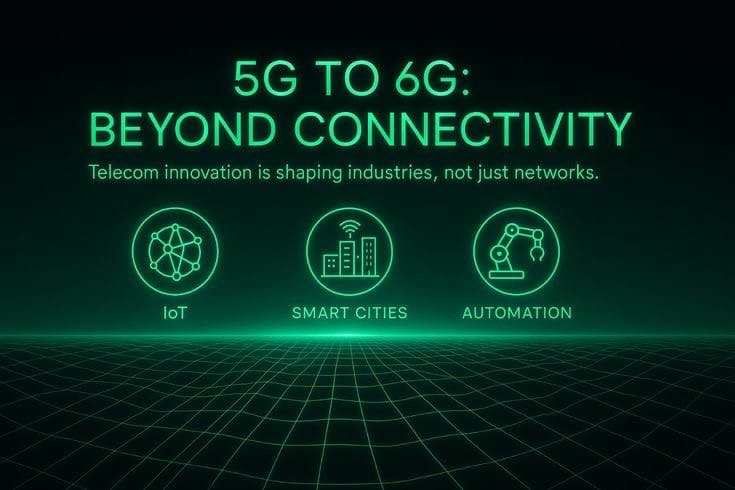
This approach is known as Integrated Sensing and Communication (ISAC), and it could become one of 6G’s defining features.
Why Everyone Talked About 5G
The arrival of 5G was met with widespread misinformation in several countries. Social media posts falsely claimed the technology could spread diseases or cause serious health problems. In some places, telecom infrastructure was even vandalized because of these rumors.
Years later, those claims have not been supported by scientific evidence. Instead, 5G has helped improve mobile connectivity, support cloud gaming, enable smart factories, and expand Internet of Things (IoT) applications.
Also Read: Nigeria Telecom Industry H1 2026: Everything You Need to Know
The experience with 5G serves as an important reminder that discussions about new technologies should be based on evidence rather than speculation.
Can 6G Really Detect People Through Walls?
This is where things become interesting.
Unlike previous mobile networks, researchers believe future 6G systems could use high-frequency radio signals not only to communicate but also to sense nearby environments.
When radio waves encounter objects such as walls, furniture, or people, they bounce back in different ways. By analyzing those reflected signals, researchers believe future 6G systems may be able to detect a person’s presence, movement, breathing patterns, or other subtle changes under specific conditions.
This does not mean 6G will work like X-ray vision or produce detailed images of people inside buildings. Instead, the technology focuses on interpreting radio signal reflections to identify activity or movement without relying on cameras.
Although similar experiments have already been demonstrated using Wi-Fi signals, 6G could make the process much more accurate, responsive, and reliable.
What Could 6G Be Used For?
If developed successfully, 6G’s sensing capabilities could benefit several industries.
Better Healthcare
Hospitals could monitor patients’ breathing or movement without attaching multiple sensors to their bodies. Medical staff could receive alerts if unusual vital signs are detected, improving patient care while reducing discomfort.
Faster Emergency Rescue
After earthquakes or building collapses, emergency responders could use 6G-powered sensing equipment to detect signs of life beneath rubble, helping rescuers locate survivors more quickly.
Smarter Homes
Future smart homes may be able to detect falls involving elderly residents and automatically notify family members or emergency services without requiring wearable devices or security cameras.
Smarter Cities
Combined with artificial intelligence, 6G networks could improve traffic management, public transportation, industrial automation, and energy efficiency by collecting real-time environmental information.
The Privacy Debate
While these possibilities are exciting, they also raise important privacy questions.
If future networks can detect movement or human presence without cameras, clear rules will be needed to determine who can access that information and how it should be used.
Privacy experts have raised concerns about potential misuse if organizations or individuals collect sensing data without users’ knowledge or consent. Unlike traditional cameras, radio-based sensing may operate in the background, making it less obvious when monitoring is taking place.
For this reason, many researchers believe strong privacy protections, transparent data policies, and government regulations should be developed alongside the technology before widespread commercial deployment.
The discussion around 6G is becoming less about health concerns and more about responsible use of increasingly intelligent networks.
When Will 6G Launch?
Despite growing interest, 6G is still in the research phase.
Governments, universities, and technology companies across the United States, Europe, China, South Korea, and Japan are actively investing in early development and standardization.
Industry experts generally expect the first commercial 6G networks to begin appearing in the early 2030s, although timelines may vary depending on global standards and infrastructure readiness.
Read Also: Why Your Phone Battery Drains Fast (And How to Fix It in 2026)
Until then, most people will continue relying on expanding 5G networks while researchers refine what 6G can realistically achieve.
Final Thoughts
6G promises much more than faster download speeds. Researchers envision a future where wireless networks can communicate, sense their surroundings, and support applications that could transform healthcare, disaster response, transportation, and smart cities.
At the same time, these new capabilities introduce legitimate privacy questions that deserve careful attention long before the technology reaches consumers.
Unlike the fears that surrounded 5G, the biggest conversation around 6G may not be about whether it’s safe, it may be about how society chooses to use it responsibly.