

WhatsApp is rolling out new parental controls for teenagers, giving parents a PIN-protected way to manage selected aspects of their teens’ accounts without accessing their private conversations.
The controls cover group activity alerts, Channels, Status visibility and Meta AI settings. WhatsApp says the features are designed to help parents guide their teenagers on the platform while preserving the privacy of their personal chats and calls.
Parents can decide who can add their teen to groups, who can see the teen’s profile picture and Status updates, and whose Status updates the teen can view. They can also limit how their teenager uses Channels.
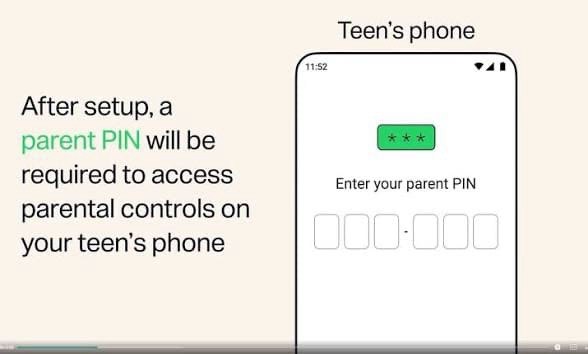
Any changes to the managed settings require approval through the parent’s PIN, and parents can turn the controls off at any time.
Parents can monitor group activity without reading chats
One of the new controls allows parents to receive alerts about certain group activity involving their teenager.
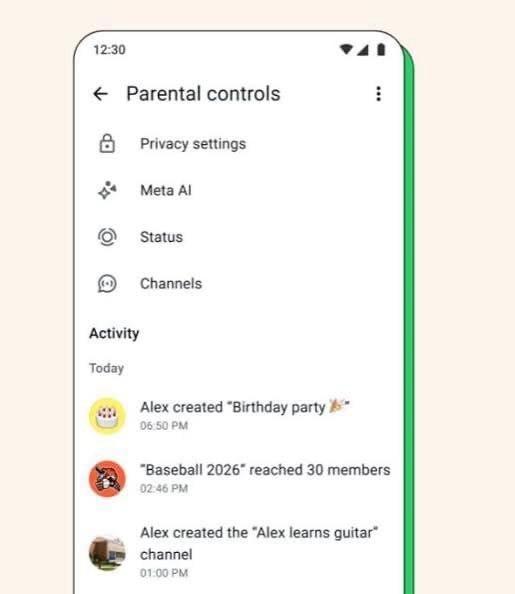
Parents can choose to receive a notification when their teen joins or leaves a group. They can also receive alerts when a group the teen belongs to reaches 30, 100 or 250 members.
The alerts give parents visibility into some of their teenager’s group activity without giving them access to the conversations taking place inside those groups.
This distinction is central to WhatsApp’s approach. The company is providing parents with information about account activity and privacy settings rather than creating a system that lets them monitor the content of their children’s messages.
WhatsApp adds parental controls for Meta AI
The new controls also extend to Meta AI.
Parents can leave the standard 13+ Meta AI experience in place or switch their teen’s account to a “Limited Content” mode.
WhatsApp says the limited setting turns off features including incognito chat and message summaries, giving parents another option for controlling how their teenager interacts with Meta AI on the platform.
The controls do not, however, give parents access to their teens’ private conversations with other users.
WhatsApp says personal messages and calls remain protected by end-to-end encryption. Parents therefore cannot use the new controls to read their teenagers’ chats or listen to their calls.
WhatsApp’s parental controls depend on the parent
While the new tools give families more options, their effectiveness will also depend on how parents use them.
Setting up the controls requires parents to navigate WhatsApp’s settings, create a PIN and decide which restrictions and notifications to enable. Parents also need to keep the PIN secure because a teenager who gains access to it could potentially change settings that are meant to require parental approval.
This could create a practical challenge for families where parents are less comfortable with smartphone settings or do not regularly use WhatsApp’s more advanced features.
The issue may be particularly relevant in countries where teenagers have adopted smartphones and digital platforms faster than some of their parents.

In Nigeria, for example, the 2026 Nigeria Smartphone Study by KPMG found WhatsApp installed on 95% of smartphones in its sample of 13,251 respondents across 12 major cities. The study reflects urban smartphone usage and does not represent every smartphone user in the country.
A separate Techsocietal survey reported that 93% of Nigerian children aged 11 to 16 had used phones or other digital devices to access the internet.
The figures highlight why tools designed to help parents manage teenagers’ online experiences can have relevance beyond the markets where the features were developed.
The controls have clear limits
WhatsApp’s new system is not designed to give parents complete visibility into everything their teenagers do on the platform.
The controls focus on specific areas such as group participation, Status, Channels and Meta AI. They do not allow parents to read private messages or listen to calls.
The system also depends on the teenager continuing to use the managed account and the parent retaining control of the PIN.
That means the technology provides a framework for parental oversight, but families still need to decide how the controls fit into their approach to online safety.
For some parents, the ability to receive group activity alerts or restrict certain features may provide useful additional oversight. Others may prefer to combine the controls with conversations about privacy, online risks and responsible smartphone use.
WhatsApp is gradually rolling out the new features
WhatsApp says the new parental controls for teen accounts are rolling out globally across iOS and Android.
The rollout is gradual, with availability expected to expand over the coming weeks. The company also says it will continue refining the features based on feedback from families.
The update follows WhatsApp’s introduction of parent-managed accounts for pre-teens earlier this year, expanding the platform’s parental-control tools to cover teenagers as well.
With the new system, WhatsApp is attempting to strike a balance between parental oversight and teen privacy. Parents can manage selected account settings and receive certain activity alerts, while private chats and calls remain protected by end-to-end encryption.
For families, the practical impact will ultimately depend not only on which controls WhatsApp provides, but also on how parents configure them and how they use them alongside broader conversations about staying safe online.