

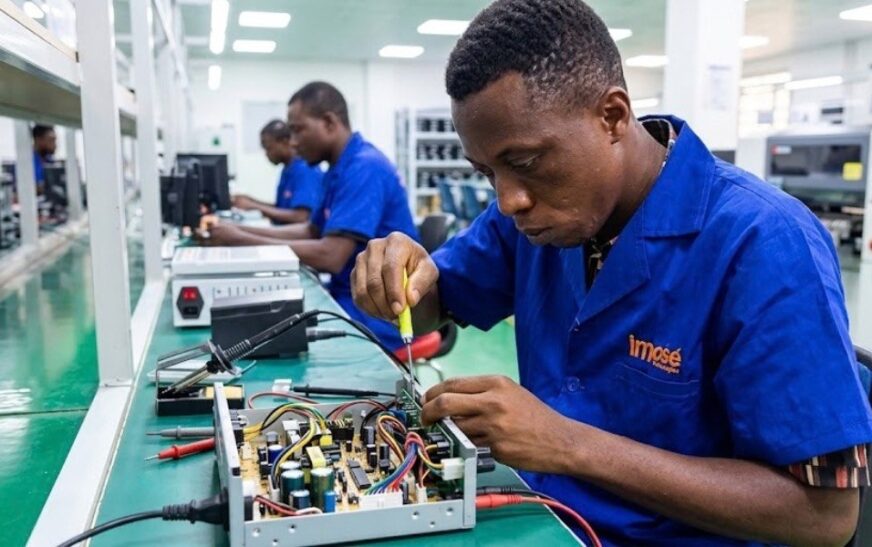
For years, Imose Technologies has been involved in the part of Nigeria’s telecom industry that most consumers rarely notice.
The Nigerian technology company has manufactured and supplied devices including routers, feature phones, desktop phones and other connected hardware, with its equipment ending up in the hands of customers of major telecom operators.
Now, Imose wants to move closer to the customer.
Through its telecom division, Imose Mobile, the company is entering Nigeria’s mobile services market as a Mobile Virtual Network Operator (MVNO). Rather than building its own nationwide mobile network, Imose Mobile will use existing infrastructure while controlling parts of the customer and service experience.
The company has already begun pre-commercial network testing in partnership with Airtel Nigeria, putting it closer to a commercial rollout after years of operating primarily as a technology and hardware supplier.
From building telecom hardware to providing connectivity
Imose Technologies was founded in 2014 and has spent more than a decade developing and supplying technology products for the Nigerian market.
Its portfolio includes mobile phones, tablets, routers, MiFi devices and other connected hardware. The company has also worked within the wider telecom ecosystem by supplying equipment used by network operators and agents.
That background is central to Imose Mobile’s strategy.
Instead of entering the telecom market as a completely new player, Imose is attempting to combine its existing hardware business with mobile connectivity.
The company holds a Tier 2 MVNO licence from the Nigerian Communications Commission (NCC). The licence, issued on April 1, 2023, is valid until March 31, 2033.
Under Nigeria’s MVNO framework, a Tier 2 operator can operate certain network and customer-facing infrastructure without owning mobile spectrum. This allows companies to provide telecom services while relying on infrastructure belonging to established Mobile Network Operators (MNOs).
For Imose Mobile, that host network is Airtel Nigeria.
Imose Mobile has already started network testing
The company is not starting from a purely theoretical position.
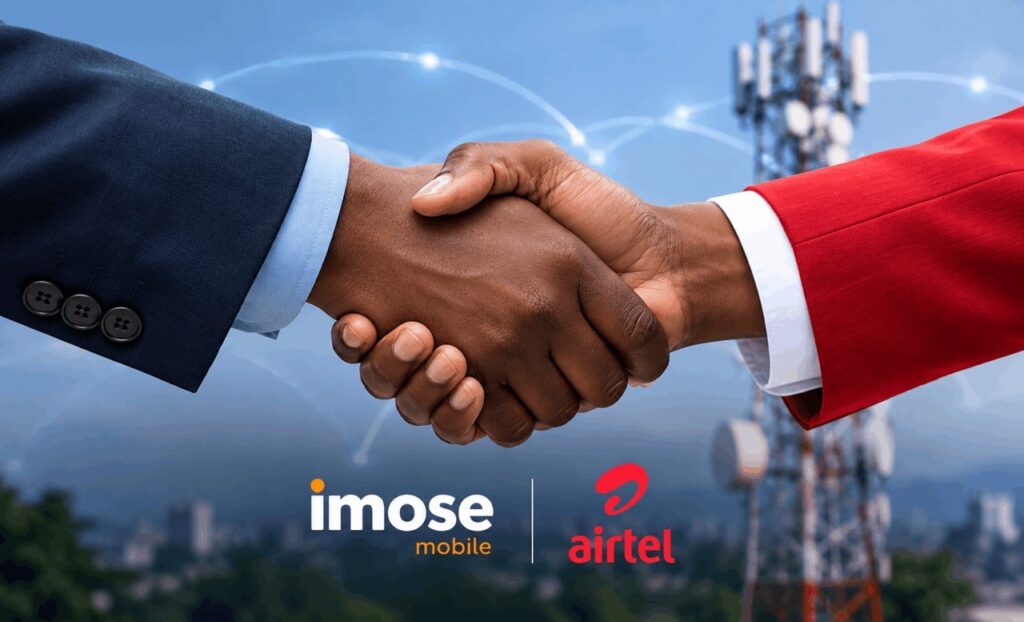
In May 2026, Imose Mobile announced the beginning of pre-commercial testing of its network in partnership with Airtel Nigeria. The testing is intended to assess network performance and customer experience before wider commercial operations begin.
Imose Mobile has also been assigned the 071803 number range for its testing phase and eventual commercial operations.
This puts the company among a growing group of MVNOs attempting to establish themselves in Nigeria’s highly competitive telecom market.
The NCC originally licensed dozens of MVNOs under its framework, with Vitel Wireless later becoming the first Nigerian MVNO to receive a dedicated mobile number series. The regulator’s current records list Imose Technologies as a Tier 2 MVNO licensee.
Why Imose is taking the MVNO route
Building a new nationwide mobile network from scratch would require enormous investment in spectrum, towers, transmission infrastructure and other network assets.
For a new entrant, using an existing operator’s infrastructure offers a more practical alternative.

That is the basic idea behind the MVNO model.
An MVNO does not necessarily own the radio network that connects its customers. Instead, it purchases access to an existing mobile network and builds its own services, branding, customer experience and commercial offerings around that connectivity.
For Imose, this model also creates an opportunity to connect its existing device business with its telecom ambitions.
The company can sell a device and connectivity as part of the same ecosystem instead of leaving customers to find a separate SIM card and mobile service.
Read Also: Lagos Life hit 1 million players in three days, and it may be rewriting the rules for Nigerian games
A SIM card designed to work with Imose devices
One of the more interesting parts of Imose Mobile’s strategy is its attempt to combine hardware, SIM cards and digital onboarding.
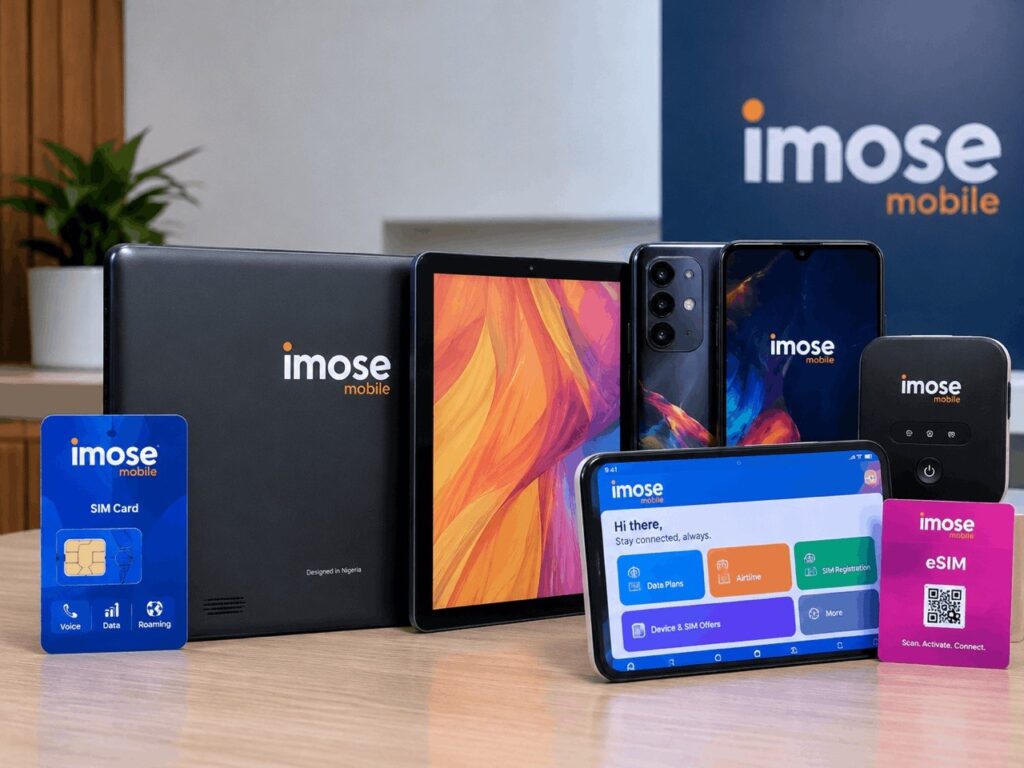
The company plans to offer physical SIMs and eSIMs while allowing customers to manage their services digitally.
Its current platform already promotes remote SIM registration, airtime and data purchases, device delivery and other services through the Imose Mobile ecosystem.
The company is also promoting device-and-SIM offers, including deals where customers can receive smartphones after purchasing qualifying data plans.
Read Also: How to Get an eSIM in Nigeria (2026): Everything You Need to Know
That approach could give Imose Mobile a different entry point from traditional telecom operators.
Rather than competing only on the price of calls and data, Imose can bundle connectivity with the hardware that customers need to access those services.
For example, its platform currently advertises logistics-focused bundles that combine smartphones, SIM cards and data access for approved work applications. It also promotes education-focused data offerings and social media plans.
Nigeria’s MVNO market is finally beginning to move
Imose Mobile’s entry comes at a time when Nigeria’s MVNO market is slowly becoming more active.
The NCC licensed 46 MVNOs, but obtaining a licence has not automatically translated into a commercial launch.
Vitel Wireless, for example, received the 0712 number series from the NCC in January 2025 and subsequently announced interconnectivity with Nigeria’s major mobile network operators.
Lebara Nigeria has gone further, commencing nationwide commercial operations in September 2026 with physical SIMs and eSIMs.
The delays experienced by several MVNOs highlight one of the biggest challenges facing the model: virtual operators still depend heavily on established networks.
They may not need to build towers or purchase spectrum, but they still need workable agreements with host networks, adequate infrastructure, regulatory approvals and enough investment to build their own customer operations.
The NCC has also acknowledged the need to review the country’s MVNO framework. In May 2026, the regulator published draft business rules for MVNO operations, with the review intended to provide greater clarity around licensing, responsibilities and relationships between MVNOs and host MNOs.
Imose is not trying to replace MTN or Airtel
Despite entering a market dominated by MTN, Airtel, Glo and 9mobile, Imose Mobile’s strategy is unlikely to be about becoming another conventional network operator.
Its advantage may instead come from serving specific customer groups with combinations of devices, connectivity and digital services.
That could include consumers purchasing Imose phones and routers, businesses that need managed connectivity, logistics operators requiring dedicated data access, and families looking for affordable devices and education-focused plans.
This is also where Imose’s history as a device manufacturer could become useful.
The company already understands the hardware side of connectivity. With Imose Mobile, it is attempting to control more of what happens after the device is switched on.
What happens next?
Imose Mobile’s commercial launch will show whether that strategy can work at scale.
The company already has the regulatory approval, a host network partnership and a platform for customers to register SIMs and manage mobile services. Its pre-commercial testing has also moved the project beyond the planning stage.
The bigger question is whether an indigenous hardware company can turn those advantages into a compelling telecom service in a market where consumers are already accustomed to established operators.
If Imose succeeds, its entry could represent more than another SIM card entering the Nigerian market.
It would mark a shift from supplying the devices that connect Nigerians to telecom networks to becoming part of the connectivity layer itself.
And that could make Imose Mobile one of the more interesting MVNO launches to watch as Nigeria’s virtual telecom market develops.