

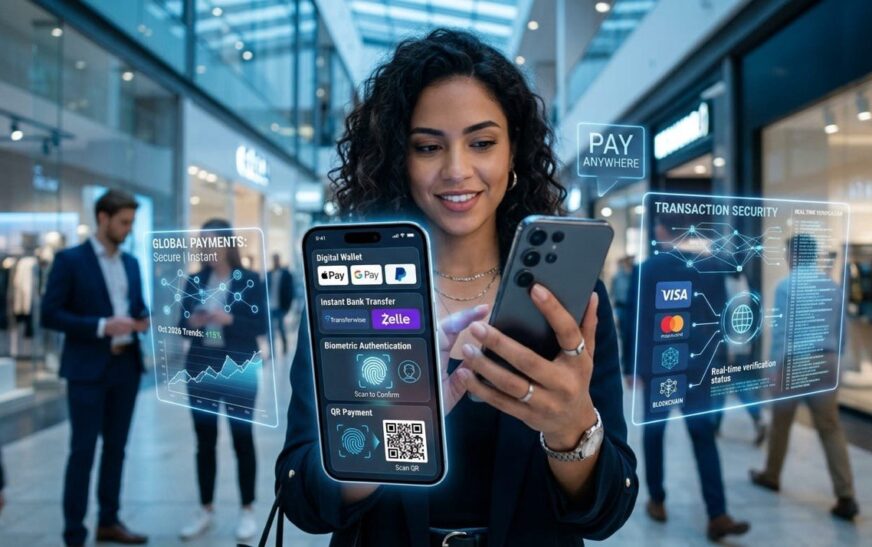
The way people pay online is evolving faster than ever. From AI-powered fraud detection to instant bank transfers and blockchain-based payment systems, businesses are adopting new technologies to meet growing customer expectations for speed, security, and convenience.
As we move closer to 2026, digital payments are no longer just about processing transactions. They are becoming smarter, faster, and more integrated into everyday experiences. Companies that understand these changes will be better positioned to improve customer satisfaction, increase conversions, and stay competitive in an increasingly digital economy.
Here are the most important digital payment trends businesses should watch in 2026.
1. AI Is Making Payments Smarter and More Secure
Artificial intelligence is transforming how payment systems operate behind the scenes.
Modern payment providers use machine learning to analyze transaction patterns in real time, helping identify suspicious activities before fraud occurs. AI can also personalize payment experiences by recommending preferred payment methods, installment plans, and targeted offers based on user behavior.
For businesses, this means fewer fraudulent transactions and a smoother checkout experience for customers.
Key Benefits
- Faster fraud detection
- Reduced chargebacks
- Personalized checkout experiences
- Improved customer trust

2. Instant Payments Are Becoming the New Standard
Consumers increasingly expect money transfers and payment confirmations to happen immediately.
Real-time payment networks allow transactions to be completed within seconds rather than hours or days. This trend is benefiting both consumers and businesses by improving cash flow, reducing settlement delays, and enhancing customer satisfaction.
Companies that continue relying on slower payment methods may struggle to meet evolving consumer expectations.
3. Digital Wallets Continue Their Rapid Growth
Digital wallets are becoming one of the most preferred payment methods worldwide.
Solutions such as mobile wallets and banking apps allow users to pay online, send money, and manage finances from a single platform. The convenience of storing multiple payment options in one place is driving adoption among both younger and older consumers.
As smartphone usage continues to rise globally, digital wallets are expected to play an even larger role in online commerce.
4. Open Banking Is Creating New Payment Opportunities
Open banking enables consumers to securely share financial information with approved third-party providers.
This innovation allows businesses to offer direct account-to-account payments, reducing dependence on traditional card networks. It can lower transaction fees, speed up settlements, and provide customers with more payment choices.
As regulations and financial infrastructure mature, open banking is expected to become a significant part of the global payments’ ecosystem.
Also Read: Africa Lost $1.11 Billion to Internet Shutdowns in 2025
5. Buy Now, Pay Later Services Are Evolving
Buy Now, Pay Later (BNPL) solutions have expanded beyond online retail.
Today, consumers use installment payment options for travel bookings, electronics, education services, and more. As the sector grows, providers are introducing stronger affordability checks and transparency measures to comply with evolving regulations.
The result is a more mature and sustainable alternative to traditional credit products.

6. Biometric Authentication Is Replacing Traditional Passwords
Security remains a major concern in digital commerce.
Biometric technologies such as fingerprint scanning, facial recognition, and behavioral authentication are helping businesses verify users more effectively while reducing friction during checkout.
Customers benefit from enhanced security without needing to remember complex passwords, creating a faster and more seamless payment experience.
7. Blockchain Technology Is Expanding Beyond Cryptocurrency
While cryptocurrencies often dominate headlines, blockchain technology is finding broader applications in payments.
Businesses are exploring blockchain-based solutions for cross-border transactions, settlement systems, and payment transparency. These systems can reduce processing times and lower costs compared to some traditional financial networks.
As adoption grows, blockchain could become a key component of future payment infrastructure.
Why These Trends Matter for Businesses
The future of payments is centered on three priorities:
- Speed
- Security
- Convenience

Consumers increasingly prefer payment experiences that require fewer steps, offer instant confirmation, and provide strong protection against fraud.
Businesses that invest in modern payment technologies today will be better equipped to meet customer expectations, improve operational efficiency, and remain competitive in 2026 and beyond.
Conclusion
Digital payments are undergoing a significant transformation. Artificial intelligence, instant payment systems, digital wallets, open banking, biometrics, BNPL services, and blockchain technology are reshaping how transactions occur across the world.
As these innovations continue to mature, businesses that adapt early will gain an advantage in attracting customers and delivering seamless online experiences. Staying informed about these digital payment trends is no longer optional, it is becoming essential for long-term growth in the digital economy.
What payment technology do you think will have the biggest impact in 2026? Share your thoughts in the comments and follow our blog for more fintech and technology insights.
Similar Read: China’s Solar Exports to Africa Soar as Clean Energy Demand Accelerates in 2026